Composite vs. Wood Decking: Which Is Better for Your Massachusetts Home?
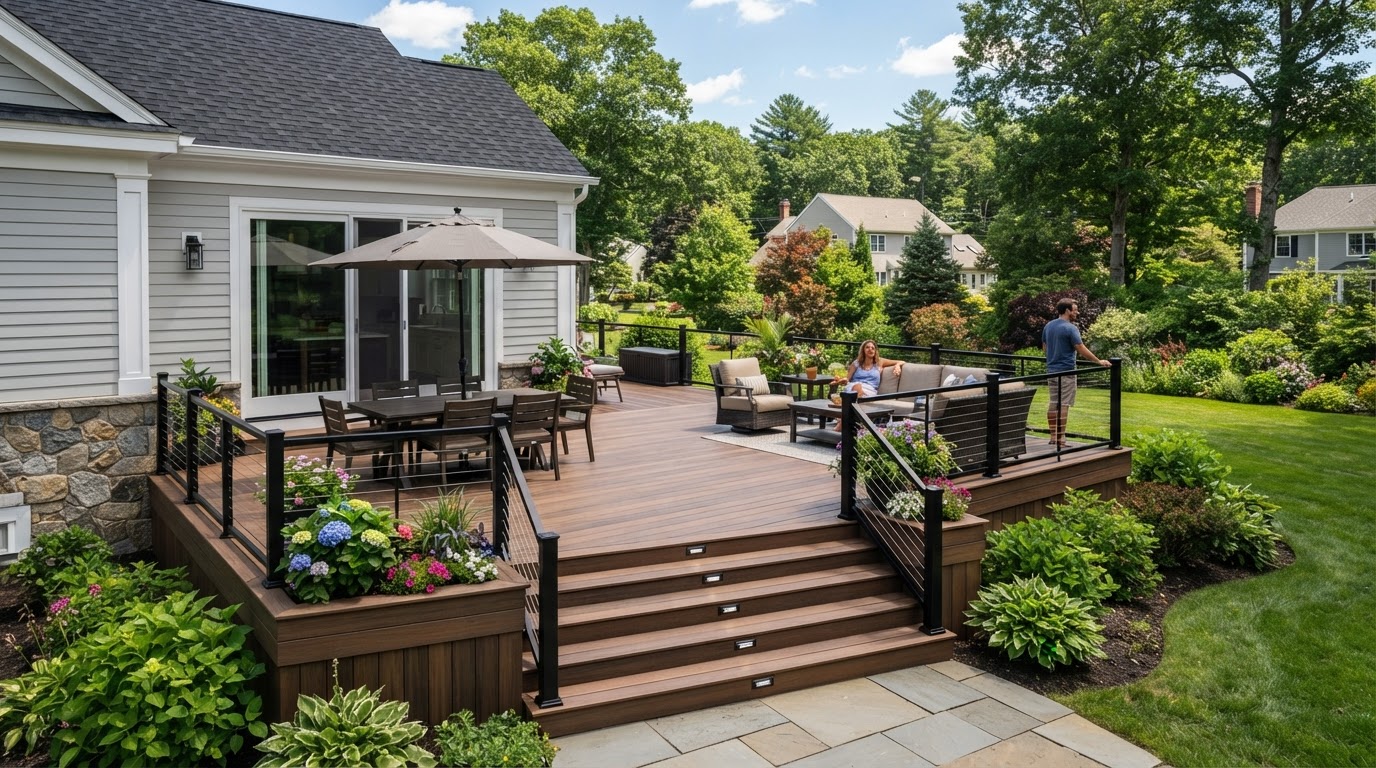
If you're planning a new deck or replacing an existing one, one of the first decisions you'll need to make is composite vs. wood decking.
Both materials can create a beautiful outdoor living space, but they differ significantly in price, maintenance, durability, appearance, and long-term performance.
For Massachusetts homeowners, the decision is even more important because decks are exposed to snow, rain, humidity, summer heat, UV exposure, and repeated freeze-thaw cycles. The same fundamentals we cover in our guide on how to choose a deck builder in Massachusetts apply here, but the material decision deserves its own deep dive.
So, is composite decking better than wood?
The short answer is: it depends on your priorities.
Wood decking generally has a lower upfront cost and provides the authentic appearance of natural lumber. Composite decking typically costs more initially but requires less maintenance and is designed for long-term outdoor use.
This guide explains the differences between composite and wood decking so you can choose the right material for your home, budget, and lifestyle.
Composite vs. Wood Decking: Quick Comparison
- Initial cost: Wood is lower; composite is higher
- Appearance: Wood offers natural wood grain; composite offers a wood-inspired appearance
- Maintenance: Wood requires regular maintenance; composite is low maintenance
- Staining/sealing: Wood usually requires it; composite generally does not
- Rot resistance: Wood depends on species and maintenance; composite is generally high
- Insect resistance: Wood depends on material; composite is generally high
- Splintering: Wood is possible; composite is less likely
- Color consistency: Wood naturally varies; composite is more consistent
- Long-term upkeep: Wood is higher; composite is lower
- Best for: Wood is best for natural appearance and lower upfront cost; composite is best for low maintenance and long-term use
What Is Wood Decking?
Wood decking is made from natural lumber and has been used for outdoor decks for generations.
Common wood decking options include:
- Pressure-treated wood
- Cedar
- Redwood
- Mahogany
- Ipe and other hardwoods
Pressure-treated wood is one of the most common and affordable options for homeowners looking for a traditional wood deck.
Cedar and other premium woods offer a more distinctive natural appearance, while hardwoods such as Ipe can provide excellent durability at a higher material cost.
Advantages of Wood Decking
Wood's biggest advantage is its natural appearance.
Every board has its own grain, texture, knots, and color variations. For homeowners who want a traditional New England-style deck, that natural character can be difficult to replicate with manufactured materials.
Wood also generally has a lower upfront material cost than premium composite decking.
Disadvantages of Wood Decking
The biggest drawback is maintenance.
Wood is an organic material and is affected by moisture, sunlight, temperature changes, and insects. Depending on the wood species and local conditions, homeowners may need to periodically:
- Clean the deck
- Sand the surface
- Apply stain
- Apply a protective sealer
- Replace damaged boards
- Inspect for rot and deterioration
The amount of maintenance required depends on the type of wood, installation, exposure, and how well the deck is maintained.
What Is Composite Decking?
Composite decking is an engineered decking material made from a combination of materials such as wood fibers and plastic polymers.
Many modern composite products are manufactured with a protective outer layer designed to improve resistance to moisture, staining, and fading.
Composite decking is available in many colors and textures designed to resemble natural wood.
Popular composite decking manufacturers include brands such as Trex and TimberTech.
The biggest reason homeowners choose composite is simple: less maintenance.
Unlike traditional wood decking, composite decking generally does not require routine staining or sealing.
Composite vs. Wood Decking: Appearance
Does composite decking look like real wood? Modern composite decking can closely replicate the appearance of natural wood. Manufacturers offer different colors, grain patterns, textures, board profiles, and surface finishes.
However, composite and natural wood still have different appearances. Wood provides natural variation from board to board, while composite tends to have a more consistent manufactured appearance.
Which looks better: wood or composite? This is largely a personal preference.
Choose wood if you want:
- Authentic natural grain
- Natural color variation
- A traditional appearance
- The ability to change the color with stain
Choose composite if you want:
- Consistent appearance
- Modern color options
- Less maintenance
- A wood-inspired look without regular staining
Composite vs. Wood Decking: Maintenance
Maintenance is one of the biggest differences between the two materials.
Wood decks generally require more ongoing care. Depending on the material and environment, maintenance may include cleaning, staining, sealing, sanding, and replacing boards that become damaged. If maintenance is neglected, moisture and UV exposure can accelerate deterioration.
Composite decking is generally much easier to maintain. Most composite decks primarily require periodic cleaning to remove:
- Dirt
- Leaves
- Pollen
- Food and drink spills
- Other surface debris
The exact cleaning requirements depend on the manufacturer and product.
Does composite decking need to be stained or sealed? Generally, no. One of the major advantages of composite decking is that it does not typically require the recurring staining and sealing associated with traditional wood decking. Always follow the specific manufacturer's care and maintenance instructions for your decking product.
Composite vs. Wood Decking: Durability
Durability depends on more than the decking board itself. The quality of the framing, drainage, fasteners, flashing, joist spacing, installation methods, and ongoing maintenance can all affect how a deck performs.
How long does a wood deck last? There is no single lifespan for every wood deck. A properly installed and maintained wood deck can last for many years, but its service life depends on:
- Wood species
- Moisture exposure
- Climate
- Maintenance
- Installation quality
- Drainage
- Structural design
Pressure-treated wood, cedar, and hardwood decking all have different performance characteristics.
How long does composite decking last? Composite decking is designed for long-term outdoor use and generally requires less maintenance than traditional wood. Actual service life depends on the specific product, installation, environmental exposure, and maintenance. Some composite manufacturers offer long limited warranties, so homeowners should review the specific product warranty before choosing a material.
Composite vs. Wood Decking in Massachusetts
Massachusetts weather makes material selection particularly important. A deck may experience:
- Heavy rain
- Snow and ice
- Humidity
- Strong summer sunlight
- Freeze-thaw cycles
- Seasonal temperature changes
Wood responds to moisture by absorbing and releasing water, which can contribute to movement, cracking, cupping, and deterioration when not properly maintained.
Composite products are engineered to provide greater resistance to many moisture-related problems, although installation still matters.
Massachusetts guidance for composite decking specifically emphasizes proper drainage, appropriate material selection, framing, and consideration of heat buildup and UV exposure.
Is Composite Decking Better for New England Weather?
For homeowners who prioritize low maintenance and moisture resistance, composite decking can be an excellent option for New England.
However, there is no single "best" decking material for every property. The right choice depends on:
- Your budget
- How much maintenance you want to perform
- Your home's sun exposure
- Your preferred appearance
- How long you plan to stay in the home
- The specific decking product
- The quality of installation
A deck should also be designed to handle local conditions rather than simply choosing a board and installing it.
Composite vs. Wood Decking: Cost
Is composite decking more expensive than wood? Generally, yes. Composite decking typically has a higher upfront material cost than standard pressure-treated wood.
However, comparing only the initial installation price can be misleading. Wood may require ongoing spending on:
- Stain
- Sealer
- Cleaning
- Sanding
- Maintenance labor
- Board replacement
Composite typically requires less routine maintenance. That means homeowners should consider both upfront cost and long-term maintenance costs when comparing materials.
What is the cheapest decking material? Pressure-treated wood is generally one of the more affordable decking options. The final project price depends on:
- Deck size
- Design complexity
- Material
- Railings
- Stairs
- Foundation requirements
- Site conditions
- Labor
- Local permitting requirements
A contractor should provide a project-specific estimate rather than relying on a generic price per square foot.
Composite vs. Wood: Environmental Considerations
Environmental impact is more complicated than simply saying one material is "green" and the other isn't.
Wood is a natural material, but its environmental impact depends on factors such as sourcing, transportation, treatment, and how long the deck remains in service.
Composite decking can incorporate recycled materials, but manufacturing, product composition, and end-of-life recycling vary by manufacturer.
If environmental impact is important to you, look at the specific product's:
- Material composition
- Recycled content
- Manufacturing practices
- Product lifespan
- Warranty
- End-of-life options
Does Composite Decking Get Hot?
Yes. Composite decking can become hot when exposed to direct sunlight, particularly with darker colors.
Heat levels vary depending on:
- Deck color
- Sun exposure
- Product design
- Weather conditions
- Amount of surrounding shade
If your deck receives strong afternoon sunlight, ask your deck builder about lighter colors and products specifically designed to manage heat.
Massachusetts design guidance also recommends considering lighter, high-reflectance colors to help mitigate heat buildup and UV-related issues.
Composite vs. Wood: Splinters
Traditional wood decking can develop splinters as the boards age and weather.
Composite decking is generally less prone to splintering because it does not behave like traditional natural lumber.
However, composite surfaces can still become damaged, scratched, or worn, depending on the product and how the deck is used.
Composite vs. Wood: Installation
The decking material is only one part of the construction process. A properly built deck requires attention to:
- Footings
- Framing
- Joist spacing
- Fasteners
- Ledger connections
- Flashing
- Drainage
- Ventilation
- Board spacing
- Railings and stairs
Composite decking may have specific installation requirements from the manufacturer, including recommended joist spacing and fastening systems.
This is why professional installation matters regardless of which material you choose.
Can You Put Composite Decking on an Existing Wood Frame?
Sometimes. If the existing frame is structurally sound, properly designed, and meets the requirements for the new decking product, it may be possible to replace the existing boards with composite decking.
However, the framing should be inspected first. Problems with the existing structure, joist spacing, drainage, or ledger connection should be addressed before installing new decking.
Replacing the boards without addressing an underlying structural problem can lead to issues later.
Composite vs. Wood: Which Is Right for You?
Choose wood decking if:
- You want a lower initial investment
- You prefer the natural look of real wood
- You enjoy the character of natural grain
- You don't mind regular maintenance
- You want the option to change the appearance with stain
Choose composite decking if:
- You want lower maintenance
- You don't want to regularly stain or seal your deck
- You want consistent color and appearance
- You prioritize resistance to moisture and insects
- You plan to keep the deck for many years
- You want to spend more time enjoying your deck and less time maintaining it
Composite vs. Wood Decking: The Bottom Line
There isn't one decking material that is perfect for every Massachusetts homeowner.
Wood decking is a strong choice for homeowners who want natural beauty and a lower upfront investment and are comfortable with ongoing maintenance.
Composite decking is a strong choice for homeowners who prioritize low maintenance, long-term use, and consistent appearance.
The most important thing is to choose a material that fits your home, budget, lifestyle, and expectations.
And regardless of the material you choose, proper deck design and installation are critical to long-term performance. DSEVENTY3 Construction LLC is fully licensed and insured, holds a 4.8-star rating across 59+ reviews, and has been recognized as a Thumbtack Top Pro and a 2026 Quality Business Award winner. Get a free, no-obligation estimate for your Massachusetts deck project today.
Ready to Choose the Right Decking Material?
Get a free, detailed, itemized estimate with no obligation. Contact DSEVENTY3 Construction LLC today to schedule your on-site assessment.
Get Your Free EstimateFrequently Asked Questions
Get a Free Estimate
Serving Medford, MA and surrounding areas. Fast response, honest pricing.
OUR SERVICES
- Deck Construction
- Wooden Decks
- Deck Repair
- Porches & Porticos
- Railing Installations
- Painting & Staining
ABOUT DSEVENTY3 CONSTRUCTION
Your local deck builder experts in Medford, MA. Licensed, insured, and committed to quality work.
Learn More About Us